
 By Global Arena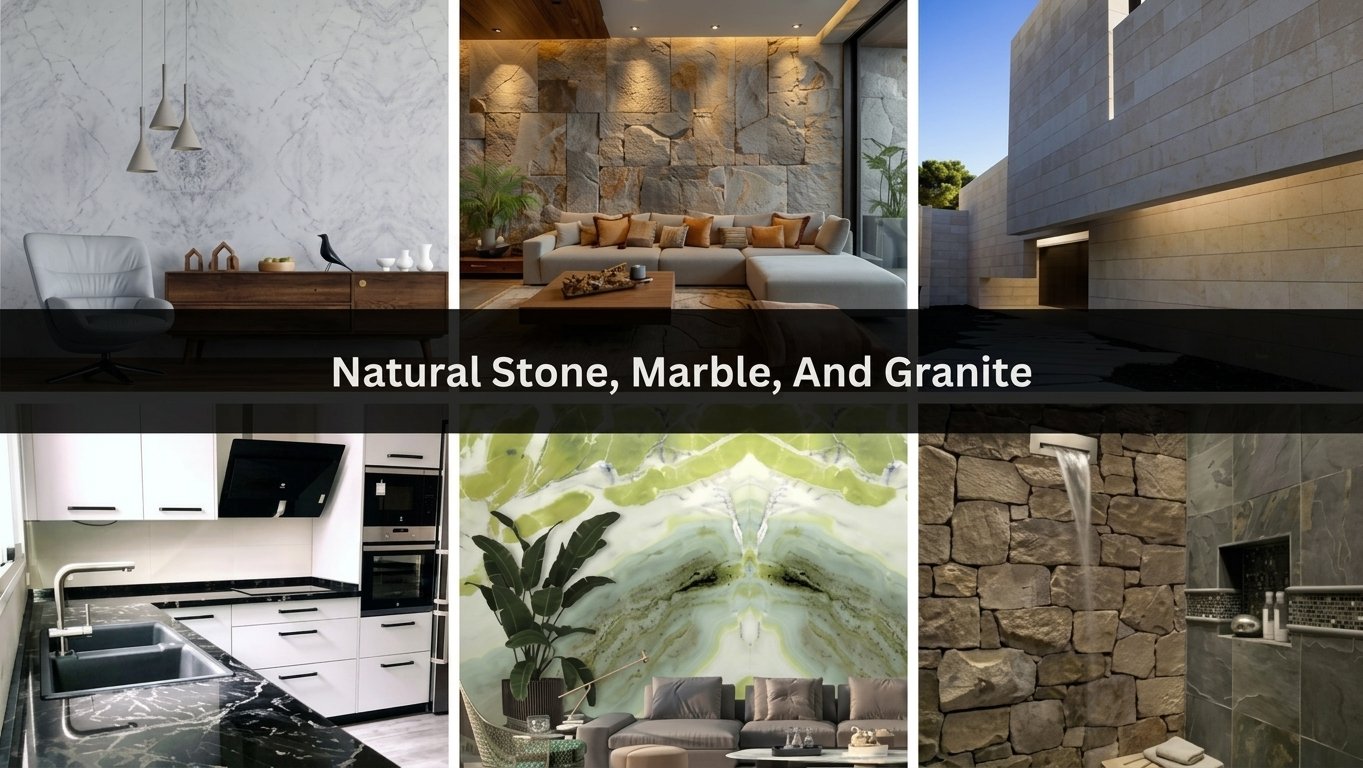
Most stone buyers choose a slab because they love the color, then discover later that the material doesn’t suit how they actually use the space. Bkstone buyers can avoid that mistake by looking beyond appearance and checking durability, maintenance, fabrication, and total project value first.
1. Know What Bkstone Offers Before Choosing a Material
A stone supplier isn’t simply a place where you pick a pretty slab and pay for it. The material you choose has to match the room, the amount of use it will receive, the desired finish, and the maintenance you’re willing to handle.
Bkstone offers natural and engineered stone solutions for residential and commercial applications, with products and services that include materials such as marble, granite, tiles, and customized stone options. That variety gives buyers flexibility, but it also means you need to understand what you’re buying rather than treating every stone as interchangeable.
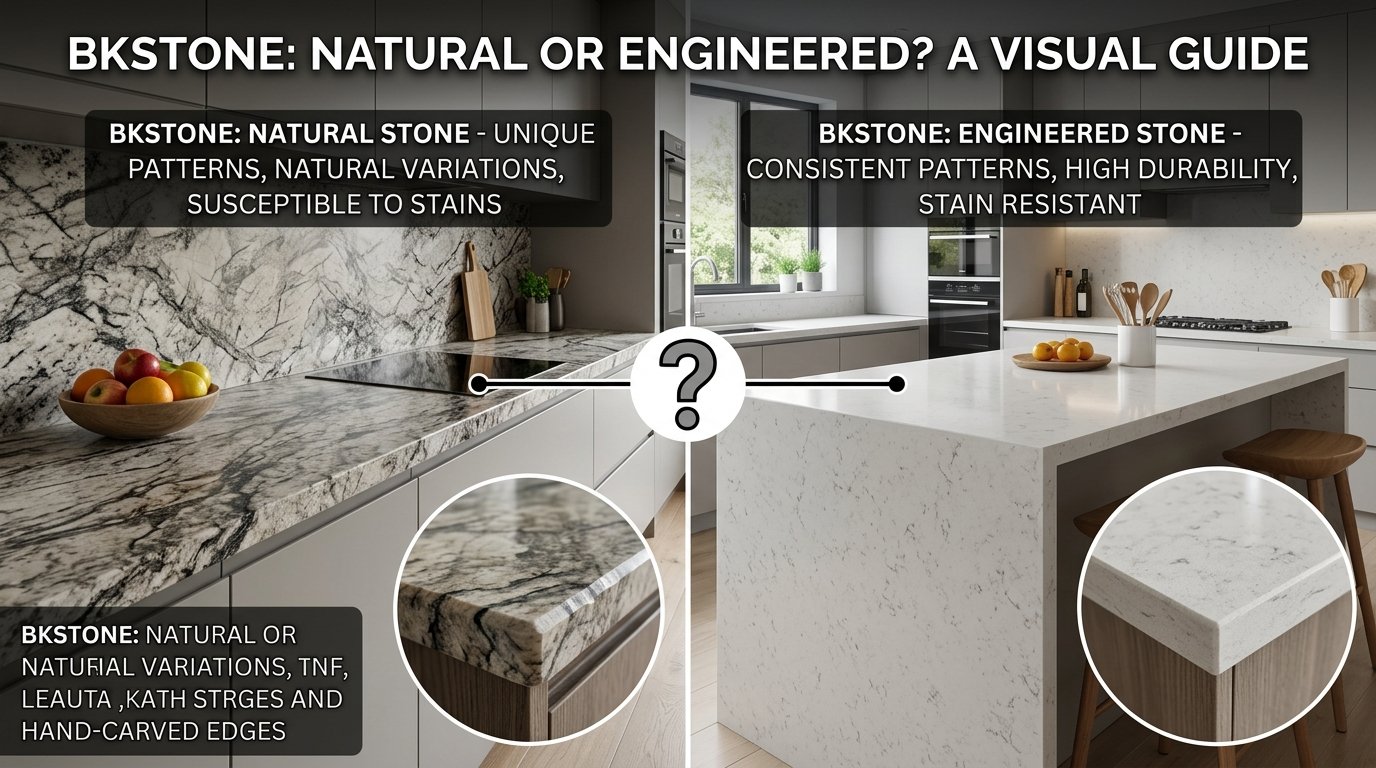
Natural stone has characteristics created by its geological formation. Marble can have dramatic veining and a luxurious appearance, while granite is commonly selected for its hardness and durability. Engineered materials can provide different combinations of appearance, consistency, and performance depending on their composition.
The U.S. Geological Survey notes that important factors in selecting dimension stone include durability, strength, color, grain, texture, and surface finish. In other words, the visual appeal of a slab is only one part of the decision.
Before contacting Bkstone, think about the actual job the material needs to perform.
Is it going on a kitchen island that will be used every day? Is it being installed as a decorative bathroom wall? Will it cover a commercial floor that sees hundreds of people walking over it every day?
Those questions immediately narrow down the most sensible choices.
A material that works beautifully as a feature wall may not be the smartest choice for a busy countertop. Likewise, a stone selected for heavy commercial traffic needs different performance characteristics from one used primarily for decoration.
Natural stone or engineered stone?
There isn’t one universal winner.
Natural stone is attractive to buyers who appreciate genuine variation, natural veining, mineral patterns, and the individuality of each slab. No two pieces are necessarily identical, which can be part of the appeal.
Engineered materials can provide greater consistency in appearance and may be attractive to buyers who want predictable patterns or specific performance characteristics.
The important point is to compare the specific product, not just the category.
Ask about its intended applications, maintenance requirements, finish, fabrication possibilities, and installation recommendations.
2. Match Bkstone to the Room You’re Designing
One of the easiest ways to make a costly stone mistake is to fall in love with the material before deciding where it will be used.
Start with the space.
Bkstone may offer suitable options for different residential and commercial projects, but the right choice depends on the demands of your particular environment.
A kitchen countertop, for example, has to deal with food, liquids, heat, cleaning, utensils, and constant daily contact. A bathroom vanity may face moisture, cosmetics, soaps, and cleaning products. Flooring has to deal with foot traffic and potentially abrasive dirt.
Here’s a simple comparison:
| Application | Main Priority | What to Consider |
|---|---|---|
| Kitchen countertop | Everyday performance | Spills, heat, cleaning, staining |
| Bathroom vanity | Moisture and appearance | Water, cosmetics, cleaning |
| Interior flooring | Wear resistance | Foot traffic, finish, safety |
| Feature wall | Visual impact | Color, texture, veining |
| Outdoor surface | Environmental resistance | Weather, moisture, temperature |
| Commercial flooring | Heavy-duty performance | Traffic, maintenance, durability |
This is why a good consultation matters.
Imagine a homeowner renovating a kitchen and choosing a highly veined marble simply because it looks beautiful in photographs. The installation is completed, and within a few weeks the owner starts worrying about every coffee cup, lemon, and spilled sauce.
The stone itself wasn’t necessarily a bad product.
It was a mismatch between the material and the owner’s expectations.
When discussing your project with Bkstone, explain how the surface will actually be used. Don’t just send a photograph and ask for the cheapest option.
Tell the supplier whether the area is high traffic, whether you’re comfortable with regular maintenance, whether appearance is your top priority, and how long you expect the installation to last.
That information can make the recommendation much more useful.
3. Bkstone Marble Can Be Beautiful, But It Needs Care
Marble has earned its reputation as one of the most visually striking materials available for interiors.
Natural veining gives marble a character that can make a kitchen island, bathroom vanity, staircase, or feature wall stand out without needing additional decoration.
But there’s a side of marble that photographs don’t show.
Maintenance.
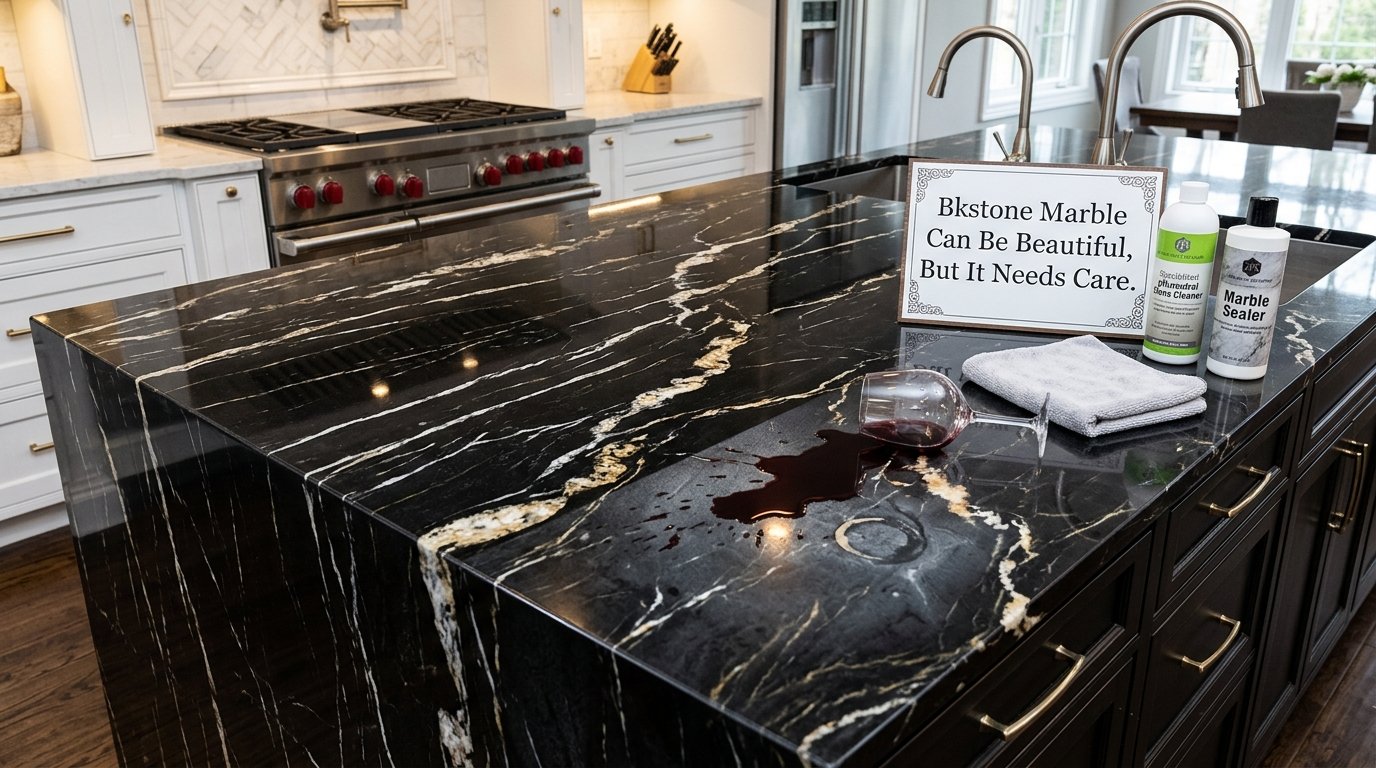
Bkstone marble selections should be considered with the stone’s characteristics and the intended application in mind. Marble is generally a calcareous stone, and calcareous materials can be sensitive to acidic substances.
The Natural Stone Institute explains that acids can etch susceptible calcareous stones. That means substances such as lemon juice, vinegar, and other acidic products can potentially leave dull or etched areas on the surface.
This doesn’t make marble a poor choice.
It simply means marble rewards an owner who understands what they’re buying.
For example, imagine you’ve just installed a beautiful marble kitchen countertop. You prepare dinner, squeeze a lemon directly over the counter, and leave the juice there while you finish cooking.
You wipe everything down later and notice a dull patch.
That’s not necessarily a conventional stain that can simply be scrubbed away. Acid can react with susceptible stone surfaces and alter their finish.
Would you still choose marble?
If you love its appearance and don’t mind using appropriate care, absolutely.
If you want a countertop that requires very little thought, you may want to compare other options.
The key is matching expectations to material characteristics.
How should marble be cleaned?
Gentle is the better approach.
The Natural Stone Institute recommends neutral cleaners, stone soap, or mild dishwashing detergent with warm water for appropriate natural stone surfaces. Abrasive cleaners and acidic products should be avoided where they can damage the material.
That makes everyday habits surprisingly important.
Wipe spills rather than letting them sit. Use suitable cleaning products. Avoid assuming that a household cleaner is safe simply because it works well on ceramic or glass.
A beautiful surface deserves the correct cleaning routine.
4. Consider Granite for Hard-Working Surfaces
If marble is often selected for visual character, granite is frequently considered when durability becomes a major priority.
Granite is an igneous natural stone and is widely used in countertops, floors, walls, and other applications where strength and durability are important.
For Bkstone customers planning a busy kitchen or commercial project, granite may deserve serious consideration.
That doesn’t mean every granite slab performs identically. Natural stone varies in mineral composition, grain, color, texture, finish, and other characteristics.
Two granite samples can look completely different even though they belong to the same broad material category.
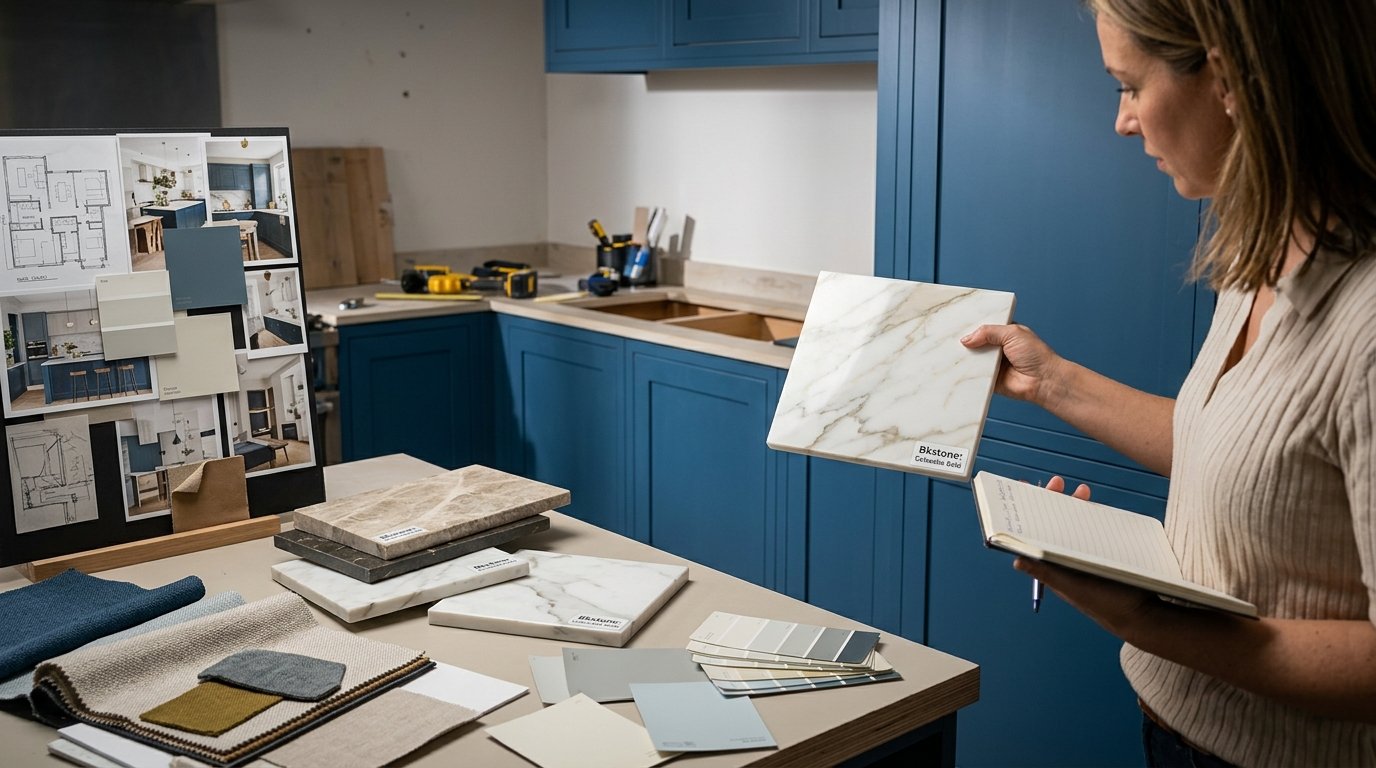
That’s one reason physical samples are so valuable.
A photograph on a screen can help you narrow your options, but it can’t perfectly reproduce the way a slab interacts with your home’s lighting. A dark stone may make a small room feel more enclosed, while a lighter material can make the same area feel more open.
Natural variation should also be expected.
Some buyers see variation as a flaw because they want every section to look identical. Others consider that variation one of the reasons to choose natural stone in the first place.
Which type of buyer are you?
If consistency matters more than natural character, discuss engineered alternatives. If you’re attracted to mineral variation and individual slab character, natural stone may be a better fit.
Granite still needs proper care, despite its reputation for toughness.
Durable doesn’t mean indestructible.
Heavy impact, unsuitable chemicals, poor installation, and neglect can affect a stone surface over time. The right maintenance routine remains part of getting the best long-term result.
5. Ask Bkstone About Custom Cutting and Finishing
Here’s something many first-time buyers don’t think about until the project is already underway: the slab is only part of the finished result.
Fabrication matters.
A high-quality stone can look disappointing if measurements are wrong, seams are poorly positioned, edges are unfinished, or cut-outs aren’t handled correctly.
Bkstone presents customized stone cutting and finishing among its project-related capabilities, which can be particularly useful when a project requires specific dimensions or details.
This matters for kitchens, bathrooms, staircases, wall panels, commercial interiors, and architectural installations where standard slab dimensions don’t necessarily fit the design.
Before placing an order, ask specific questions.
- What slab dimensions are available?
- Can the material be cut to my measurements?
- What edge profiles are available?
- Can sink or appliance cut-outs be provided?
- What surface finishes are available?
- How will visible seams be positioned?
- Is polishing included?
- Is transportation included?
- Who is responsible for installation?
- What happens if material arrives damaged?
Don’t be embarrassed by detailed questions.
They’re cheaper to ask before installation than after.
Why the finish matters
Stone doesn’t look the same under every finish.
A polished surface can emphasize color, depth, and natural patterns while reflecting more light. A honed finish gives a softer, less reflective appearance and can create a different feel altogether.
There are also practical considerations.
A highly polished surface may show certain marks more noticeably, while textured finishes can require different cleaning approaches.
Your decision should therefore consider both appearance and daily use.
If you’re working with an interior designer or architect, bring the fabrication discussion into the design stage rather than leaving it until the last minute.
That can help avoid awkward joints, unnecessary waste, or design compromises.
6. Bkstone Buyers Should Think About Maintenance Before Installation
Here’s my strongest advice: don’t choose stone that you already know you’ll hate maintaining.
It sounds obvious, but buyers regularly spend most of their time comparing colors and almost none discussing cleaning.
Bkstone materials should be evaluated not only for how they look when newly installed but also for how much attention they’ll require over the years.
Different stones have different characteristics.
The Natural Stone Institute recommends identifying the type of stone before choosing cleaning products because different materials can respond differently to chemicals and abrasive products.
For routine cleaning, neutral products are generally a safer starting point for appropriate natural stone surfaces.
Avoid assuming that stronger cleaner means cleaner stone.
It can mean the opposite.
A harsh product may damage the finish while providing no meaningful advantage in everyday cleaning.
Sealing is another area where generic advice causes confusion.
People often hear that natural stone must be sealed every year. That’s too simplistic.
Some stones and applications benefit from sealing, while others may not need it. The appropriate frequency depends on the stone, the treatment used, the location, and how heavily the surface is used.
An impregnating sealer generally increases resistance to staining rather than making the stone completely stain-proof.
So if a supplier recommends sealing, ask:
What exactly does this treatment protect against, and how often should it be checked?
That question is more useful than simply asking whether the stone is “sealed.”
Simple habits make a difference
For everyday care:
- Clean spills promptly.
- Use appropriate neutral cleaners.
- Avoid acidic products on susceptible stone.
- Don’t use abrasive powders without checking suitability.
- Keep grit off stone flooring.
- Use mats in high-traffic areas where practical.
- Follow the manufacturer’s or supplier’s care instructions.
- Check whether the specific material requires sealing or another treatment.
You don’t need a complicated cleaning ritual.
You need the right one.
7. Compare Bkstone Prices by Total Project Cost
A cheap stone quote isn’t necessarily a cheap project.
This is one of the most important points to understand before buying.
The material price is only one component of your final bill.
You may also have fabrication, edge finishing, cut-outs, delivery, installation, sealing or treatment, and other project-specific costs.
That’s why Bkstone buyers should compare complete quotations rather than looking only at the price per square foot or square meter.
Consider this example.
You’re ordering approximately 60 square feet of countertop material.
Supplier A offers a lower material price, but sink cut-outs, edge finishing, transportation, and installation are charged separately.
Supplier B has a higher material price but includes several fabrication services.
At first glance, Supplier A looks cheaper.
After everything is added, Supplier B could actually be the better-value option.
This is why your quotation should clearly separate major cost components.
| Cost Factor | What to Check |
|---|---|
| Stone | Price and quantity |
| Fabrication | Cutting and preparation |
| Edge work | Profile and finishing |
| Cut-outs | Sink, hob, outlets, etc. |
| Delivery | Transport and handling |
| Installation | Labor and fitting |
| Treatment | Sealing or other recommended care |
| Waste | Additional material required |
A professional-looking quotation isn’t necessarily the cheapest.
It’s the one that allows you to understand exactly what you’re paying for.
Don’t compare unlike quotations
If one supplier is quoting raw material and another is quoting a finished installation, you’re not comparing the same product.
Ask both suppliers to quote using the same measurements and specifications.
That makes the comparison much fairer.
For larger commercial projects, also ask about volume availability, lead times, replacement material, delivery schedules, and project coordination.
A stone supplier that can provide a beautiful sample but can’t reliably supply the required quantity on schedule may not be the right choice for a large project.
How to Choose the Right Bkstone Option
At this point, you might be wondering whether Bkstone is the right choice for your project.
That’s not a question that can be answered simply with “yes” or “no.”
The better question is whether the specific material, service, price, and project support fit your requirements.
Start by identifying the application.
Then narrow down the material.
After that, compare the finish, dimensions, fabrication requirements, maintenance expectations, and complete cost.
A good buying process should look something like this:
- Define where the stone will be installed.
- Measure the required area accurately.
- Decide what performance characteristics matter most.
- Compare suitable natural or engineered materials.
- Request physical samples or inspect slabs where possible.
- Confirm the desired finish and fabrication details.
- Ask for a complete quotation.
- Review maintenance requirements.
- Confirm delivery and installation arrangements.
- Only then make the final purchase decision.
This approach takes slightly more time at the beginning, but it can save considerable frustration later.
And don’t underestimate the value of asking for alternatives.
If your first choice is marble but your budget or maintenance expectations don’t suit it, ask what comparable options are available.
If you’re considering granite but aren’t sure about the color, request several samples.
If the project has unusual dimensions, discuss fabrication before ordering.
The goal isn’t to find the most expensive material.
It’s to find the material that makes sense for the project.
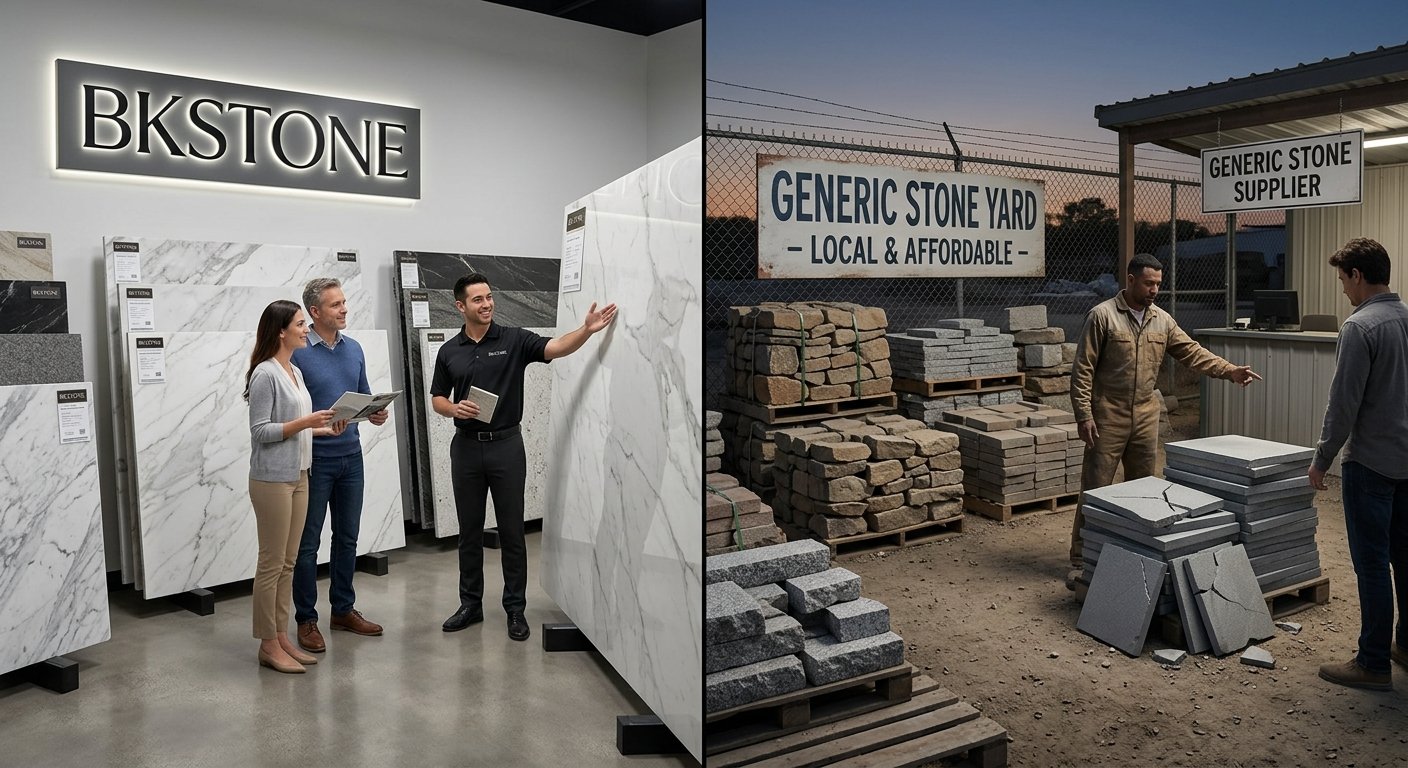
Bkstone vs. a Generic Stone Supplier
Not every project needs a specialized supplier.
Sometimes a general building-material supplier can provide exactly what you need. For a straightforward renovation with standard dimensions, that may be perfectly reasonable.
However, projects involving custom fabrication, specific finishes, large quantities, architectural requirements, or unusual dimensions may benefit from a supplier that can support those requirements.
Bkstone positions its offering around natural and engineered stone solutions for residential and commercial customers, including custom stone-related services.
That makes project requirements particularly important when evaluating the supplier.
| Factor | General Supplier | Specialized Stone Provider |
|---|---|---|
| Basic materials | Often suitable | Suitable |
| Product guidance | Varies | May be more specialized |
| Custom cutting | Depends on capability | Important consideration |
| Custom finishes | Varies | Often worth discussing |
| Large projects | Depends on stock | Depends on capacity |
| Architectural work | Varies | May offer more project support |
| Best comparison method | Price + specification | Specification + service + price |
Neither option automatically wins.
The right supplier is the one that can deliver the material and service your project actually needs.
For a homeowner, that could mean simple guidance and reliable installation. For a contractor, it could mean consistent supply and predictable lead times. For an architect, fabrication capability and finish options may be much more important.
Questions to Ask Before Ordering Bkstone
Before committing to Bkstone, prepare a short list of questions.
You’ll get better answers if you provide the supplier with enough information about the project.
Tell them:
- What room or area you’re working on
- Approximate measurements
- Indoor or outdoor location
- Preferred material
- Preferred color
- Desired surface finish
- Edge requirements
- Required cut-outs
- Delivery location
- Installation requirements
- Desired completion date
Then ask for clarification about anything you don’t understand.
For example, don’t accept a quotation that simply says “stone installation.”
Ask what’s included.
Does it cover measuring? Cutting? Edge finishing? Delivery? Installation? Sealing?
The more clearly these details are established before work begins, the fewer unpleasant surprises you’re likely to encounter.
If you’re comparing two products, ask the supplier to explain the practical difference.
You don’t need a sales pitch.
You need information that helps you make a decision.
Frequently Asked Questions
Is Bkstone good for home renovation projects?
Bkstone offers natural and engineered stone solutions that can be considered for residential applications such as countertops, flooring, walls, bathrooms, and other interior projects. The suitability depends on the specific material and application.
Rather than judging the supplier by the brand name alone, compare the exact stone, finish, fabrication, installation requirements, maintenance, and total cost for your project.
Is Bkstone suitable for kitchen countertops?
Bkstone can be considered for kitchen countertop projects where the selected material is appropriate for the intended use.
Granite is commonly used for high-use countertop applications because of its hardness and durability. Marble can also create an impressive countertop, but it requires more awareness of maintenance and sensitivity to acidic substances.
Your kitchen habits should influence the decision as much as the appearance of the slab.
Does Bkstone offer custom stone cutting?
Bkstone presents customized stone cutting and finishing among its stone-related services. Custom fabrication can be particularly useful for countertops, architectural projects, bathrooms, feature walls, and installations requiring specific dimensions.
Always confirm the exact fabrication services available for your selected material before placing an order.
Does natural stone require sealing?
Not every natural stone requires sealing.
Some materials and applications benefit from an impregnating sealer that increases resistance to staining, while others may not require treatment. The appropriate decision depends on the stone and its intended use.
Ask the supplier or stone-care professional about the specific material rather than following a generic annual-sealing rule.
Conclusion
Bkstone can be a practical option to consider when you’re sourcing natural or engineered stone for a residential, architectural, or commercial project, but the smartest purchase isn’t based on appearance alone.
Think about the room, the material, durability, maintenance, fabrication, installation, and complete project cost. Marble may be worth choosing for its distinctive character, while granite may make more sense for a hard-working surface. Engineered options can also deserve consideration when consistency or specific performance characteristics are priorities.
The most useful thing you can do before ordering is simple: send your exact measurements and intended application to the supplier and request two comparable material options with material, fabrication, delivery, installation, and maintenance requirements clearly explained.
That gives you something much more valuable than a pretty showroom sample: a buying decision based on how the stone will actually perform in your space.