 By Global Arena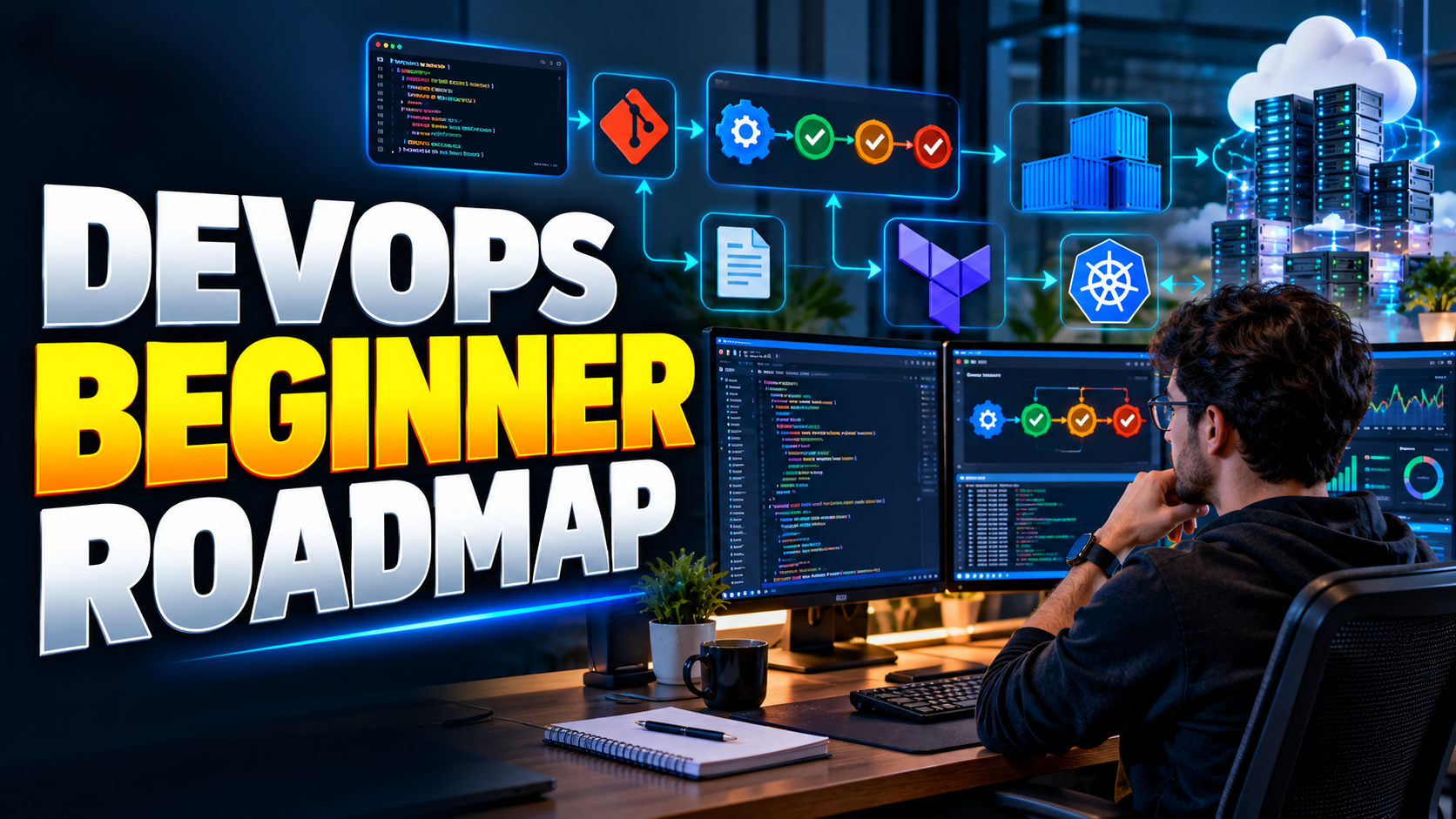
People searching for droven. io devops tutorials are usually trying to find practical ways to learn DevOps, understand common DevOps tools, and see how modern software workflows fit together. A useful learning path starts with Linux, Git, and networking before moving into automation, CI/CD, Docker, cloud infrastructure, Terraform, and Kubernetes. Droven.io DevOps tutorials may be part of that search, but learners should separate general DevOps guidance from claims about specific Droven.io courses or training programs. The real goal is simpler — learn DevOps through practical skills, repeatable workflows, and hands-on projects you can actually build.
TL;DR — Droven.io DevOps Tutorials at a Glance
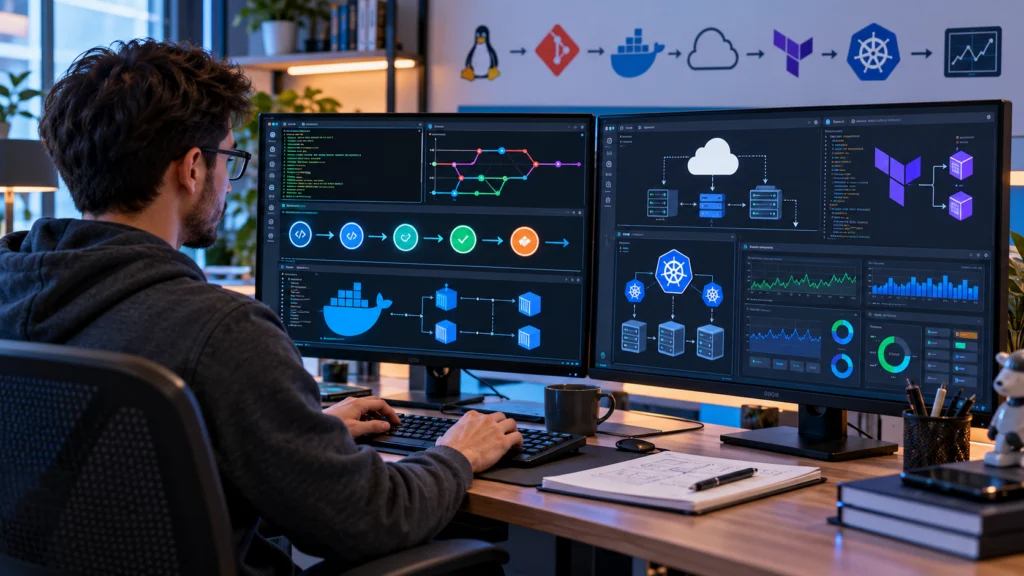
Droven. io Devops tutorials for beginners can be approached through a practical DevOps learning roadmap. Start with Linux, networking, and Git, then learn CI/CD and Docker. From there, move into AWS or another cloud platform, Terraform, Kubernetes, monitoring, and DevSecOps. Hands-on projects matter more than memorizing dozens of commands. Any claims about official Droven.io courses, certifications, access, or pricing should be checked directly before you rely on them.
What Are Droven.io DevOps Tutorials?
The phrase Droven. io Devops tutorials is generally searched by people interested in learning DevOps concepts, automation, cloud tools, and software deployment workflows. DevOps connects software development and IT operations, with an emphasis on collaboration, automated processes, continuous integration, continuous delivery, and reliable releases.
A typical DevOps learning path covers much more than a single tool. You may work with Linux servers, Git repositories, a CI/CD pipeline, Docker containers, cloud services, Infrastructure as Code, and monitoring tools.
The distinction matters, though. General DevOps tutorials can explain these skills without being part of an official Droven.io curriculum. Specific claims about Droven.io training should have a clear source rather than being assumed from the search phrase alone.
Is Droven.io a DevOps Course Platform?
You shouldn’t automatically treat Droven.io as a formal DevOps course or certification provider simply because pages appear for this search query. Before paying for training or relying on a stated curriculum, check the website itself for current course details, access terms, pricing, instructor information, and certification claims.
What Can You Learn From DevOps Tutorials?
Good Droven. io Devops tutorials connect individual technologies to a real software delivery process. Instead of learning Docker, Git, or Terraform in isolation, you learn where each tool fits — from writing code through deployment and monitoring.
| Topic | What You Learn | Common Tools |
|---|---|---|
| Linux | Command line, servers, permissions | Linux, Bash, SSH |
| Version Control | Track and collaborate on code | Git, GitHub |
| CI/CD | Automate testing and deployment | Jenkins, GitHub Actions |
| Containers | Package applications | Docker |
| Orchestration | Manage container workloads | Kubernetes |
| Infrastructure as Code | Manage infrastructure through code | Terraform |
| Cloud | Deploy apps and infrastructure | AWS, Azure, Google Cloud |
| Monitoring | Track systems and troubleshoot | Prometheus, Grafana |
A beginner doesn’t need to learn every DevOps tool at the same time. Pick the foundation first, practice it, then add another layer.
Droven.io DevOps Learning Roadmap for Beginners
Beginners should build DevOps skills in layers rather than trying to learn every tool at once. A structured order also makes advanced topics such as Kubernetes much easier to understand later.
Step 1 — Learn Linux, Networking, and Git
Start with the command line, files, permissions, processes, SSH, and basic networking concepts such as IP addresses, ports, DNS, and HTTP. Then learn Git and GitHub for version control. Practice creating repositories, branches, commits, pull requests, and resolving simple merge conflicts.
Step 2 — Learn Scripting and CI/CD
Basic Bash and Python can save a lot of repetitive work. You don’t need advanced programming skills at this stage. Learn enough scripting to work with files, variables, commands, and simple automation. Then build a basic CI/CD pipeline with Jenkins or GitHub Actions that automatically tests code after a change.
Step 3 — Learn Docker and Cloud Fundamentals
Next comes containerization. Learn what Docker images and Docker containers are, how to write a Dockerfile, and how ports and volumes work. Then practice deploying an application to AWS, Microsoft Azure, or Google Cloud. Understanding virtual machines, storage, networking, and access permissions will make later cloud DevOps work easier.
Step 4 — Move to Terraform and Kubernetes
Terraform introduces Infrastructure as Code (IaC), where infrastructure configurations can be written, reviewed, and managed as code. Kubernetes comes later. It handles container orchestration and introduces concepts such as pods, deployments, services, configuration, and scaling.
Step 5 — Add Monitoring and DevSecOps
Production environments need visibility. Prometheus and Grafana are commonly associated with metrics and monitoring, while logs help with troubleshooting. Security should also become part of the workflow — permissions, secrets, dependency checks, container security, and safer CI/CD practices all matter.
| Learning Stage | Focus | Practical Goal |
|---|---|---|
| Foundation | Linux, networking, Git | Manage code and servers |
| Automation | Bash/Python, CI/CD | Build automated pipelines |
| Containers | Docker + cloud | Containerize and deploy apps |
| Infrastructure | Terraform + Kubernetes | Manage infrastructure and container workloads |
| Operations | Monitoring + security | Maintain reliable production systems |

DevOps Tools Worth Learning
Rather than collecting tools just to make a longer skills list, learn what each category does inside a DevOps workflow. Git and GitHub handle version control and team collaboration. Jenkins and GitHub Actions support CI/CD and deployment automation, while Docker packages an application into containers.
Kubernetes manages container workloads. Terraform handles Infrastructure as Code, and Ansible is commonly used for configuration management. For cloud infrastructure, AWS, Microsoft Azure, and Google Cloud are the major platforms learners frequently encounter.
Then there are Prometheus and Grafana for monitoring and visibility.
For learners interested in U.S. cloud, software, or infrastructure roles, hands-on experience matters. Build something with these tools rather than simply adding their names to a résumé. Even a small working project can show how the pieces connect inside production-style engineering workflows.
How Much Does It Cost to Learn DevOps?
The DevOps training cost can range from nothing for documentation and free DevOps tutorials to paid online DevOps training, cloud usage, instructor-led programs, and certification exams. Costs depend on the provider, region, training format, cloud resources used, and certification selected.
The table below describes general learning options. It is not official Droven.io pricing.
| Learning Option | Typical Cost Model | Good For |
|---|---|---|
| Documentation & free tutorials | Free | Getting started |
| Self-paced courses | Free or paid | Structured learning |
| Cloud practice | Free tiers + usage fees | Hands-on cloud skills |
| Training programs | Provider-dependent | Guided learning |
| Certification exams | Provider-dependent | Validating specific skills |
Free resources can take you surprisingly far. Paid cloud training or a DevOps certification may make sense later, once you know which technologies match the direction you’re pursuing.
Build a Simple DevOps Project for Hands-On Practice
A hands-on DevOps project is where separate tutorials start making sense together. You don’t need a huge application either. A basic web app is enough.
1. Create a basic application
↓
2. Store the code in a GitHub repository
↓
3. Add automated tests
↓
4. Build a CI/CD pipeline
↓
5. Package the application in a Docker container
↓
6. Run a cloud deployment
↓
7. Add monitoring and troubleshoot failures
Try changing the application after deployment and let your pipeline handle the new build. Break something intentionally, too… then find out why it failed.
For learners preparing for U.S. cloud, software, or infrastructure roles, a project like this can demonstrate practical workflow knowledge. It doesn’t guarantee a job, but it gives you something concrete to discuss and improve.

How to Get More From Droven.io DevOps Tutorials
Use a simple cycle: Learn → Practice → Break → Troubleshoot → Fix → Document → Repeat.
Don’t memorize commands just because a tutorial lists them. Type them yourself and learn what changes when a command fails. Build small projects, keep your work in GitHub, and use official documentation for Docker, Kubernetes, Terraform, AWS, and other tools alongside tutorials.
And document your mistakes. A failed CI/CD job or broken Docker build can teach you a lot once you figure out the cause.
As your DevOps practice grows, connect the separate skills into one working delivery process. That’s where hands-on experience starts feeling like real-world DevOps rather than a collection of isolated lessons.
FAQs About Droven.io DevOps Tutorials
What are Droven. io Devops tutorials?
Droven.io DevOps tutorials is a search phrase associated with people looking for DevOps learning material, tools, workflows, and beginner guidance. Readers should distinguish general DevOps educational material from any specific course, certification, or training claim attributed to Droven.io.
Are Droven. io Devops tutorials suitable for beginners?
Beginners can use DevOps tutorial material more effectively when it starts with Linux, networking, Git, and basic scripting. Topics such as Terraform and Kubernetes make more sense after those foundations. Check individual Droven.io resources directly to see their stated skill level.
Are Droven. io Devops tutorialss free?
Don’t assume all Droven.io-related DevOps material is free, paid, or part of a formal course without checking the current source. Many general DevOps resources and official tool documentation are available free, while third-party training programs and certification exams may charge fees.
What should I learn first for DevOps?
A practical order is Linux → networking → Git → scripting → CI/CD → Docker → cloud → Terraform → Kubernetes → monitoring and security. You can adjust the sequence as your projects become more advanced, but strong Linux and Git skills give you a useful starting base.
Should I learn Docker before Kubernetes?
Yes, learning Docker and container fundamentals first generally makes Kubernetes easier to understand. Get comfortable with images, containers, ports, volumes, and registries before moving into Kubernetes pods, deployments, services, and container orchestration.
Do I need coding skills to learn DevOps?
You don’t need advanced software development skills on day one. Basic Bash and Python are useful for scripting and automation, while familiarity with code makes CI/CD troubleshooting easier. Start small, then improve your programming knowledge as your projects demand it.
Final Thoughts
Droven. io devops tutorials can lead you into a much broader learning path than a single tool or lesson. Start with Linux and Git, add automation and CI/CD, then work through Docker, cloud infrastructure, Terraform, Kubernetes, monitoring, and security. Don’t rush to collect every tool name. Build small things, troubleshoot them, and keep improving the same project. Once the separate pieces begin working together, you’ll have a much clearer picture of how DevOps works in practice.