
 By Global Arena
Yes, traditional corn tortillas are naturally gluten-free. They are typically made from corn masa, water, and lime, ingredients that do not naturally contain gluten. That makes 100% corn tortillas a common choice for people following a gluten-free diet. Still, not every store-bought tortilla is identical. Some products may combine corn with wheat flour, while cross-contact can occur during manufacturing or restaurant preparation. If you have celiac disease or need to avoid gluten for medical reasons, checking the ingredient list, gluten-free label, and preparation method is more reliable than assuming every tortilla labeled “corn” is suitable.
TL;DR: Are Corn Tortillas Gluten Free?
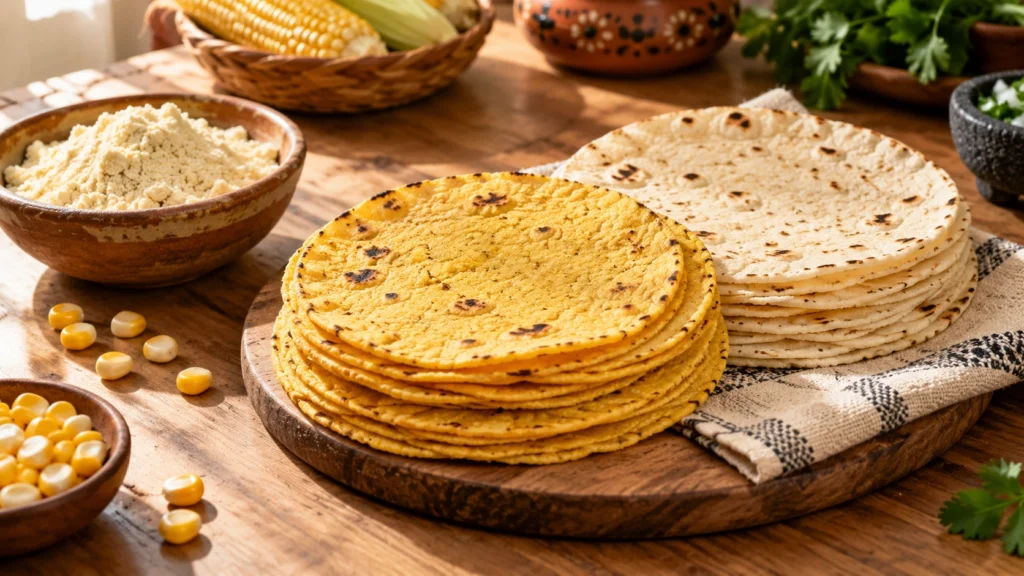
Yes. 100% corn tortillas are naturally gluten-free because traditional versions are made with corn masa, water, and lime. However, some packaged tortillas may contain wheat or other gluten-containing ingredients. Always check the ingredient list and gluten-free label. For people with celiac disease, cross-contact during manufacturing or restaurant preparation is another consideration, especially when corn and flour tortillas share equipment.
Are Corn Tortillas Gluten Free?
So, are corn tortillas gluten free? Traditional corn tortillas are. Corn is naturally gluten-free, and the Celiac Disease Foundation includes corn among naturally gluten-free foods. Gluten is found naturally in wheat, barley, rye, and related grains.
Traditional tortillas are primarily made from corn masa rather than wheat flour. This is what separates them from standard flour tortillas.
The distinction becomes more important with packaged products. A tortilla marketed as a “corn tortilla” may have a longer ingredient list, so check the package instead of relying only on the product name.
In the United States, the FDA regulates voluntary “gluten-free” claims. Foods carrying that claim must meet federal requirements, including having less than 20 parts per million (ppm) of unavoidable gluten. A gluten-free label can therefore provide useful additional information when shopping for packaged tortillas.
What Are Corn Tortillas Made Of?
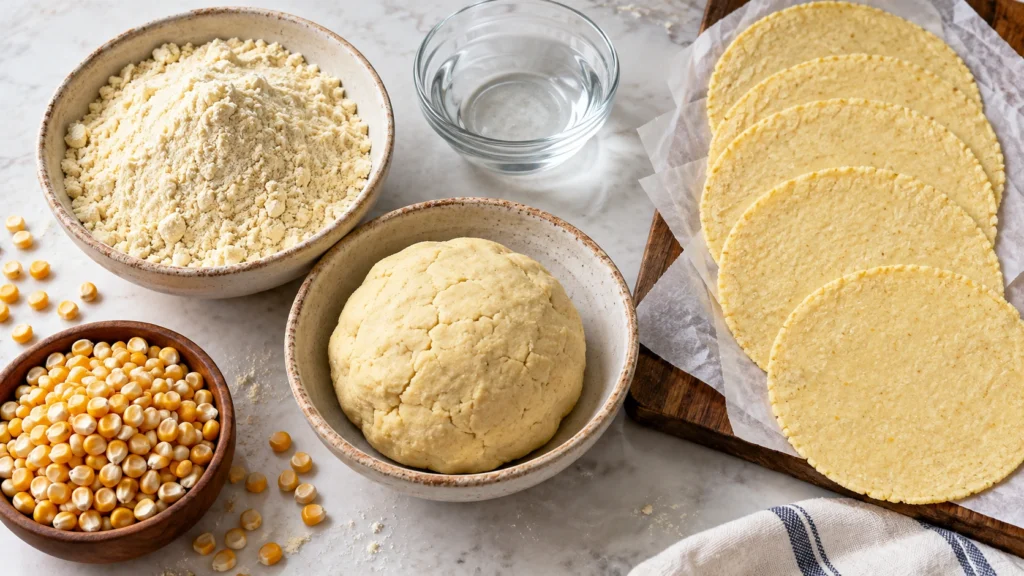
Traditional Mexican corn tortillas have a remarkably simple ingredient list. Corn is cooked and soaked in an alkaline solution, commonly using lime (calcium hydroxide), through a process called nixtamalization. The prepared corn is ground into masa, which can then be shaped and cooked into tortillas.
Masa harina is dried masa flour. It is mixed with water to make dough for homemade corn tortillas. Commercial tortillas may contain additional ingredients for texture, freshness, or shelf life, so formulas can vary from one product to another.
| Common Ingredient | Naturally Gluten-Free? | What to Know |
| Corn masa | Yes | Traditional tortilla base |
| Masa harina | Yes* | Check the individual package |
| Water | Yes | Standard ingredient |
| Lime/calcium hydroxide | Yes | Used during nixtamalization |
| Wheat flour | No | Contains gluten |
*Pure corn-based masa harina is naturally gluten-free, but people concerned about cross-contact should check the specific package and labeling.
Are All Corn Tortillas Gluten Free?
No. Although traditional corn tortillas use naturally gluten-free ingredients, don’t assume every product has the same recipe or preparation conditions.
100% Corn Tortillas
Tortillas made entirely with corn masa and other gluten-free ingredients are naturally gluten-free. Look at the ingredient list to confirm what the particular product contains.
Corn and Wheat Tortillas
Some tortillas combine corn with wheat flour. These are not gluten-free simply because corn appears in the product name or ingredient list. The Celiac Disease Foundation specifically warns that tortillas that are not entirely corn-based may contain wheat ingredients.
Cross-Contact
A tortilla can have gluten-free ingredients but still encounter gluten through shared manufacturing or food-preparation environments. Shared utensils, surfaces, storage, or cooking equipment are potential sources of cross-contact. This matters particularly for people with celiac disease.
Corn Tortillas vs. Flour Tortillas: Which Are Gluten Free?
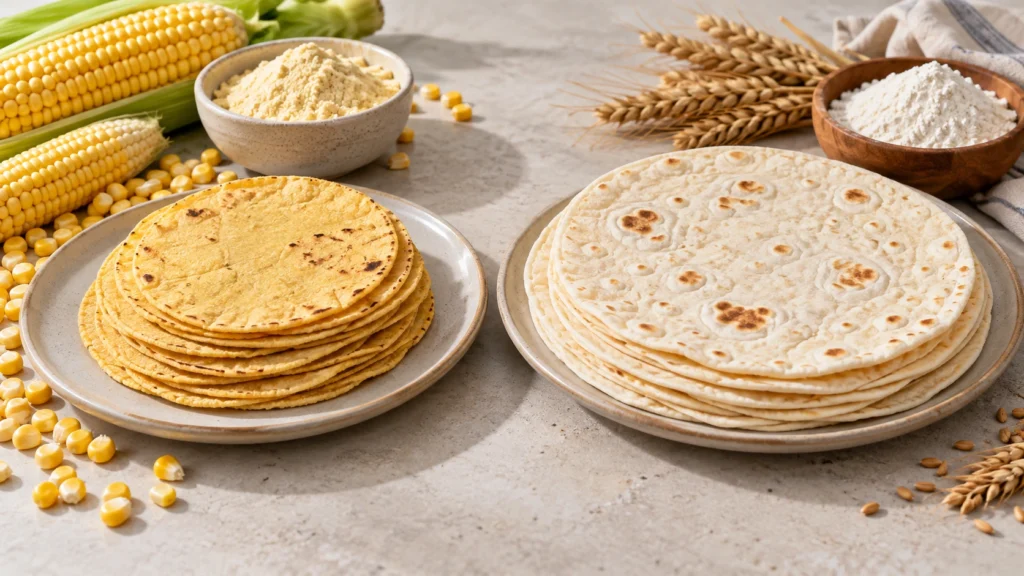
The main difference is the grain used to make them. Traditional corn tortillas use corn masa, while conventional flour tortillas are generally made with wheat flour.
| Tortilla Type | Usually Gluten-Free? | Main Ingredient | What to Check |
| 100% corn tortilla | Yes | Corn masa | Ingredients and label |
| Flour tortilla | No | Wheat flour | Contains wheat/gluten |
| Corn-wheat tortilla | No | Corn + wheat | Ingredient list |
| Gluten-free labeled tortilla | Yes* | Varies | Product label |
| Cassava tortilla | Usually | Cassava | Ingredient list |
*Products using a gluten-free claim in the U.S. must comply with applicable FDA requirements.
For someone avoiding gluten, the choice between corn tortillas vs. flour tortillas is therefore significant. Standard wheat tortillas aren’t gluten-free, whereas a 100% corn tortilla can be.
Are Corn Tortillas Safe for Celiac Disease?
Corn itself is naturally gluten-free, so corn tortillas made with suitable ingredients can fit into a gluten-free diet. For someone with celiac disease, however, ingredients are only part of the picture.
Cross-contact matters too. It can occur when gluten-free food touches shared utensils, cooking surfaces, storage areas, or equipment that has also handled gluten-containing foods. The Celiac Disease Foundation recommends avoiding this type of contact when preparing food for someone with celiac disease.
Packaged products carrying a U.S. gluten-free claim must comply with FDA rules. Among other requirements, any unavoidable gluten present must be below 20 ppm.
If you need to avoid gluten for medical reasons, read the full label rather than assuming “corn” automatically means a particular packaged product is appropriate for you.
How to Tell if Corn Tortillas Are Gluten Free
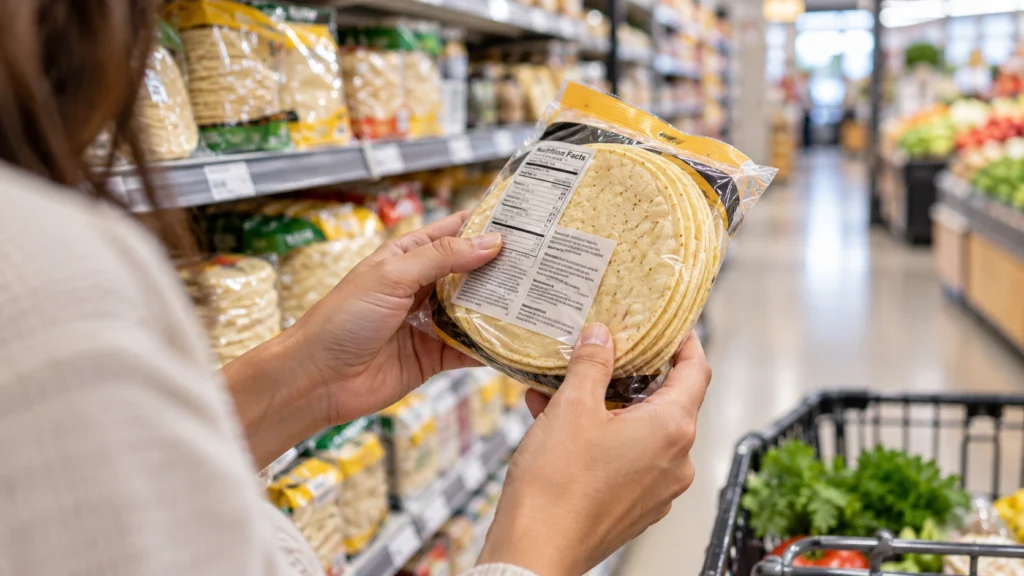
The easiest way to check packaged corn tortillas is to read the label carefully. Don’t rely only on pictures of corn or the word “corn” on the front.
Quick Gluten-Free Check
| Check | What to Look For |
| Product name | 100% corn tortilla |
| Ingredients | Corn/masa without wheat |
| Gluten-free claim | Clearly labeled gluten-free |
| Allergen statement | Check for wheat |
| Manufacturing info | Cross-contact information, if provided |
| Restaurant preparation | Shared surfaces and equipment |
Start with the ingredient list and look for wheat or wheat flour. Then check whether the package carries a gluten-free claim.
Remember that “wheat-free” and “gluten-free” aren’t interchangeable terms because gluten can also come from barley and rye.
If a packaged product’s ingredients or gluten status remain unclear, the FDA recommends contacting the manufacturer or checking its website for additional information.
Are Restaurant Corn Tortillas Gluten Free?
Restaurant corn tortillas can be gluten-free, but both their ingredients and preparation method matter. A Mexican restaurant may use 100% corn tortillas while also preparing flour tortillas in the same kitchen.
Potential cross-contact can involve a shared griddle or comal, tortilla press, utensils, prep surfaces, or other equipment. Beth Israel Deaconess Medical Center’s celiac dining guidance recommends requesting 100% corn tortillas and taking precautions around shared preparation.
When ordering, three simple questions can help:
- “Are these tortillas 100% corn?”
- “Do they contain any wheat?”
- “Are they prepared on the same surface as flour tortillas?”
If staff cannot confirm the ingredients or preparation process, someone who medically needs to avoid gluten may want to choose another option.
Are Corn Tortilla Chips Gluten Free?
Plain corn tortilla chips can be gluten-free, but the corn base isn’t the only thing to consider. Packaged chips may include seasonings or additional ingredients that need to be checked.
At restaurants, the fryer is another consideration. Corn chips cooked in oil shared with breaded or other gluten-containing foods can be exposed to cross-contact. The Celiac Disease Foundation identifies shared fryer oil as one possible source of gluten cross-contact.
For restaurant dining, celiac-focused guidance recommends asking for 100% corn chips and, where needed, chips prepared in a dedicated gluten-free fryer.
How Much Do Gluten-Free Corn Tortillas Cost?
The price of gluten-free corn tortillas in U.S. grocery stores varies by brand, package size, ingredients, location, and whether the product is organic or specialty-made. Rather than assuming a fixed national price, compare the unit price and package size at your local store.
| Type | Relative Price | Typical Choice |
| Standard corn tortillas | $ | Everyday tacos and meals |
| GF-labeled corn tortillas | $–$$ | Gluten-conscious shoppers |
| Organic corn tortillas | $$ | Organic preference |
| Specialty GF tortillas | $$–$$$ | Alternative ingredients |
A higher price doesn’t automatically make a tortilla safer. The ingredient list and relevant gluten-free labeling are more useful for determining whether a product meets your needs.
FAQs About Gluten-Free Corn Tortillas
Are Yellow Corn Tortillas Gluten Free?
Yes, traditional yellow corn tortillas are naturally gluten-free when made with corn and other gluten-free ingredients. Yellow corn itself does not contain gluten. With store-bought products, check the ingredient list and gluten-free labeling because recipes and manufacturing conditions can vary.
Are White Corn Tortillas Gluten Free?
White corn tortillas can also be gluten-free. The color of the corn does not determine whether a tortilla contains gluten. What matters is the complete ingredient list and, for people concerned about cross-contact, how the product was manufactured or prepared.
Is Masa Harina Gluten Free?
Pure masa harina is made from corn, which is naturally gluten-free. It is commonly mixed with water to make corn tortilla dough. When purchasing packaged masa harina, check the label if you need additional assurance about gluten-containing ingredients or potential cross-contact.
Do Corn Tortillas Contain Wheat?
Traditional 100% corn tortillas do not require wheat. However, some commercial tortillas can combine corn with wheat flour or other ingredients. Check the ingredient list rather than assuming every product marketed as a corn tortilla is wheat-free or gluten-free.
Can You Eat Corn Tortillas on a Gluten-Free Diet?
Yes, 100% corn tortillas made without gluten-containing ingredients can be part of a gluten-free diet. If you have celiac disease, also consider cross-contact and product labeling. At restaurants, ask about both the tortilla ingredients and shared preparation equipment.
Conclusion: The Bottom Line on Corn Tortillas and Gluten
So, are corn tortillas gluten free? Traditional 100% corn tortillas are naturally gluten-free, making them a practical option for many people following a gluten-free diet. Store-bought and restaurant versions still deserve a quick check. Use a simple rule: confirm 100% corn ingredients, read the ingredient list and gluten-free label, and consider cross-contact when it matters. That is especially important for anyone who needs to avoid gluten because of celiac disease.